
New Delhi, August 25, 2026.
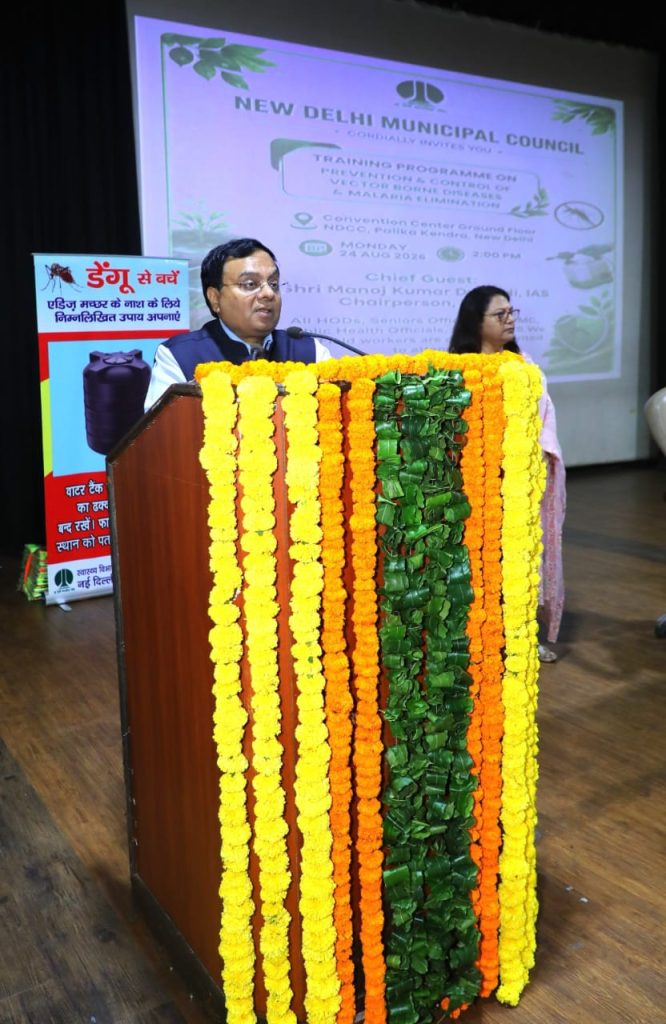
New Delhi Municipal Council (NDMC) Chairman – Shri Manoj Kumar Dwivedi inaugurated an interactive sensitization session for Sanitation Inspectors, Assistant Sanitation Inspectors, Sanitation Workers and field-level workers to further strengthen preventive and containment measures against Dengue, Chikungunya and Malaria in the NDMC area.
While addressing the gathering of the training session, NDMC Chairman – Shri Manoj Kumar Dwivedi said that – “At present, no case of malaria is being reported in the NDMC area. However, this should not lead to complacency. We know from experience that vector-borne diseases often follow cyclical patterns, and diseases such as dengue and malaria can suddenly re-emerge and assume epidemic proportions. Therefore, the absence of cases in recent years cannot be taken as a guarantee for the future. The changing pattern of rainfall this year—with intermittent dry spells followed by sudden showers—can also lead to water stagnation and create favourable conditions for the breeding of disease-carrying vectors. At present, we need to remain vigilant against malaria, dengue and H1N1 influenza, particularly as fluctuations in temperature can also facilitate the spread of infections.
He further said that our sanitation workers are the frontline warriors in this preventive effort. If they discharge their responsibilities with discipline, dedication and a professional and technically sound approach, we can significantly strengthen our preparedness and prevent these diseases. He stated that I assure our sanitation teams that all necessary equipment, resources and support will be provided to enable them to perform their duties effectively.
Shri Dwivedi exhorted the sanitation staff and said that when our sanitation workers enter their respective areas, they are, in effect, the face and representatives of NDMC. We must therefore work with a clear zero-tolerance approach towards lapses in preventive measures. Our objective should be zero cases, and every possible preventive measure must be undertaken continuously and proactively to ensure that not a single case emerges in the NDMC area. Our teams are working round the clock with commitment and dedication to achieve this goal.”
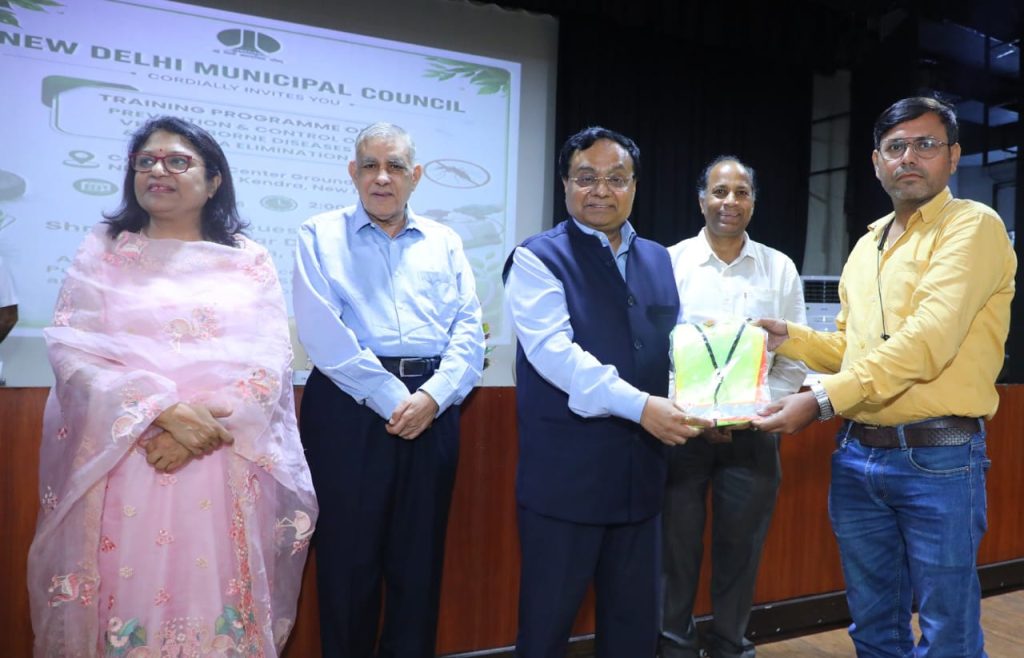
As part of the initiative to strengthen the preparedness and safety of the frontline workforce, PPE and fluorescent jackets were provided to the Palika Sahayks during the programme. The protective equipment is intended to support their safety and visibility while carrying out field duties.
On the occasion, NDMC Medical Health Officer – Dr. Shakuntla Srivastva informed that the session focused on enhancing field-level preparedness, strengthening surveillance and ensuring timely identification and elimination of mosquito-breeding sites across residential, commercial and public areas under NDMC jurisdiction. She also informed that NDMC has remained Malaria free for the last 2 years and now is time to work towards Malaria Elimination from the NDMC area. This workshop is an important stepping stone for NDMC to plan and take measures to maintain Malaria free NDMC.
During the interactive session, the expert on Vector Borne Disease Dr. R.S Sharma interacted with field personnel and briefed on the importance of regular inspection of vulnerable areas, source reduction, prevention of water stagnation and effective vector-control measures. Special emphasis was laid on identifying potential breeding spots and taking immediate corrective action to prevent the proliferation of mosquitoes responsible for vector-borne diseases.
The participants also discussed practical challenges encountered during field inspections and exchanged suggestions for improving coordination, monitoring and response mechanisms. The interactive format enabled sanitation and field staff to share their experiences and adopt more effective strategies for tackling mosquito-borne diseases at the ground level.
NDMC officials emphasized that concerted efforts by field staff, supported by continuous monitoring and public participation, are essential to keeping dengue, chikungunya and malaria under control. Sanitation teams were directed to maintain heightened vigilance, undertake regular inspections and ensure prompt action wherever mosquito-breeding conditions are detected.
The NDMC has been undertaking sustained preventive measures, including anti-larval activities, source reduction, inspections of vulnerable locations, awareness initiatives and intensified field surveillance, as part of its comprehensive strategy to protect public health during the vector-borne disease season. The session reinforced NDMC’s focus on a proactive, coordinated and field-oriented approach to vector-borne disease prevention, with the objective of ensuring a clean, healthy and safer environment for residents, visitors and workers in the NDMC area.
